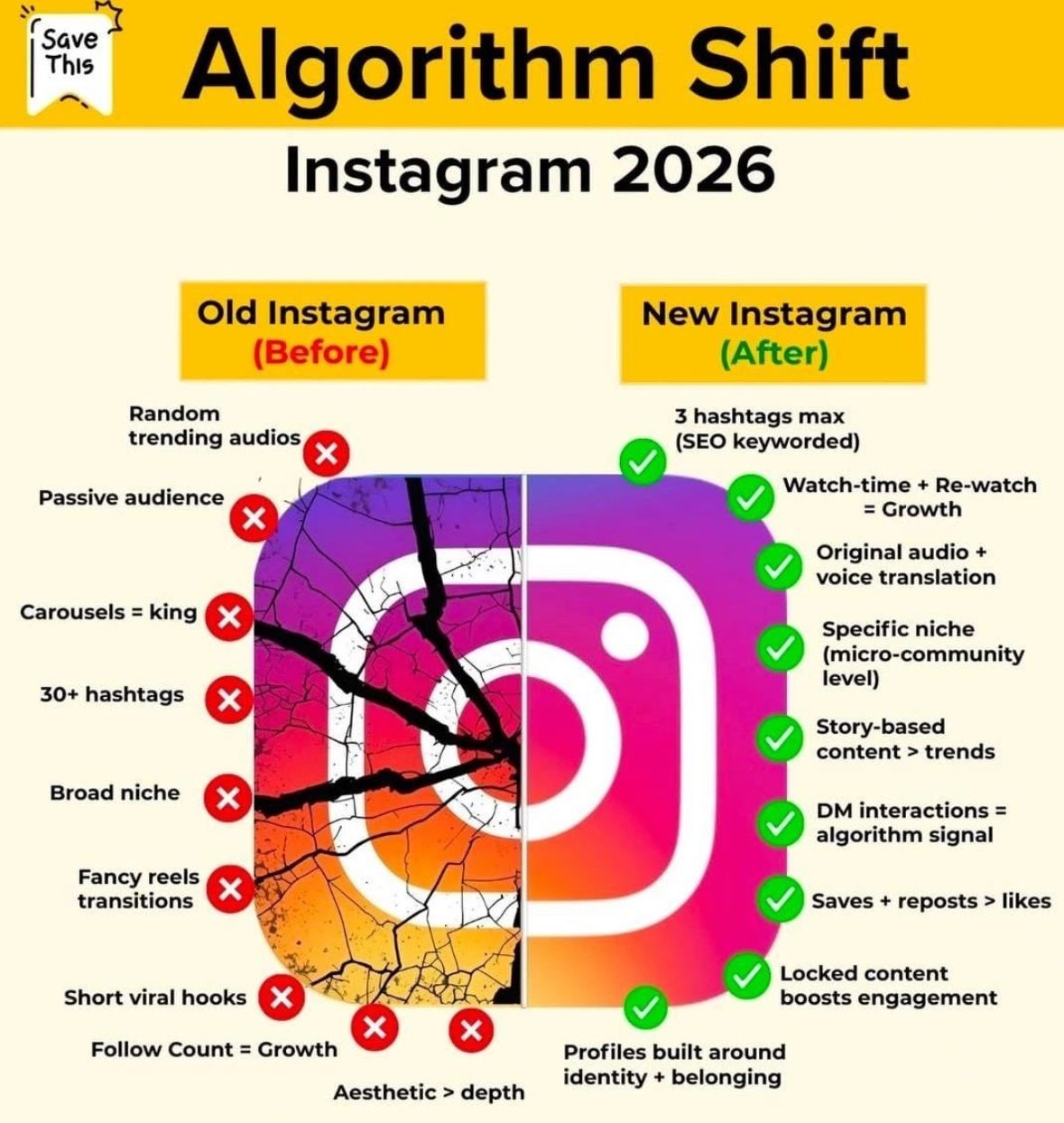
Instagram “Algorithm Shift 2026” What’s Actually True? There’s a viral graphic claiming a massive Instagram algorithm reset for 2026 This infographic was created by Ashish Mandal (https://lnkd.in/dYETPPsE) – an edit creator on IG, but the claimed strategies need to be fact checked) A lot of it sounds exciting, but parts of it are oversimplified or just wrong Here’s a clearer picture, based on Instagram’s public explanations & Adam Mosseri’s recent breakdowns What Instagram REALLY optimizes forInstagram doesn’t have “one algorithm” it runs multiple ranking systems for Feed, Reels, Stories & Explore, all chasing one thing: how much users enjoy and engage with your content Across formats, three signals keep coming up: – Watch time & retention– Likes per reach– Sends/shares (especially into DMs) If a post holds attention and gets shared, it’s far more likely to be pushed to non‑followers What the graphic gets right (directionally) 1) Watch time + re‑watch = growth: The system heavily rewards how long people watch and whether they come back to re‑watch Hooks still matter, but sustained attention matters more 2) Original content beats lazy trends: Purely reposting trending audios or formats without adding anything new is losing power Original content, your own audio, and clear POV are increasingly favored 3) DMs, saves and shares > likes: “Sends per reach” & saves are treated as deeper intent than a double tap Content people need to send to friends travels further 4) Niche clarity helps recommendations: Accounts with a clear topic and consistent value are easier for the system to understand and recommend to the right people Where the graphic misleads 1) “3 hashtags max”: There’s no magic number The real shift is from hashtag stuffing to a small set of relevant, SEO‑style keywords in hashtags, captions & on‑screen text 2) “Locked content boosts engagement: Scarcity & exclusivity can deepen community, but there’s no official boost just because content is paywalled or restricted; performance still comes down to response 3) “Carousels are dead” or “Reels are king” is too binary Format is secondary; watch time, shares & completion rate matter more than whether it’s a Reel or carousel A more accurate 2026 playbook: For creators & brands, the game looks more like this: – Design for retention, not just the hook – Make content that’s DM‑worthy (relatable, useful, or entertaining enough to send) – Use a few tightly relevant hashtags and keywords, not 30 random tags – Lean into original, niche‑aligned content over generic trends – Use Stories & DMs to deepen relationships, because your relationship graph heavily influences who sees you next If you’re optimizing for watch time, shares, and real conversations, you’re already building for the “new” Instagram – no matter what the next viral algorithm graphic says

Do Instagram Reel Covers Really Matter?
Should Content Creators Care About Instagram Reel Covers? Does it have Real Impact? If you’re investing time in making custom Reel covers, read this before your next upload What Instagram’s Head Adam Mosseri has clarified: 1) Your Reel cover/thumbnail does not impact reach or algorithmic distribution 2) Custom thumbnails (from Canva/Adobe Express) have zero negative effect on how your Reel performs in Recommendations or Explore: algorithm simply doesn’t care So, where do Reel covers actually matter? 1) Profile Grid Aesthetics: – Covers show up in your feed and profile grid, they make first impressions – A branded grid signals professionalism and intentionality – Messy grids > confused visitors 2) Profile-Level Click-Through: – A cover with clear topic text helps profile visitors instantly pick content that interests them – This boosts your views from returning and new profile visitors 3) Content Discoverability: – Creators who teach, coach, or share resources benefit most clear covers make your profile a searchable resource library for your audience 4) Brand Consistency: – Consistent covers with your brand colors/fonts build credibility and trust – Even if you skip covers sometimes, intentional design has compounding effects 5) No Impact on Algorithm, But Yes on Human Behavior: – Most Reel views come from IG’s Recommendations, where cover isn’t shown – But people do judge your expertise based on profile appearance Pro Tips for Reel Covers (if you use them): – Keep the core message in the center/top third of the cover– Limit text to 3-4 actionable words– Use template batches—update covers even after posting – Recommended dimensions: 1080 x 1920 px (safe zone in the center) Who Should Focus on Reel Covers? – Business, educational, and expert-led creators: Covers = valuable asset – Entertainment-only creators: Optional for algorithm, useful for branding Bottom Line: Covers don’t change reach, but they make your content discoverable and your brand trustworthy, especially for “profile browsers.” What’s working for you? Do custom covers drive more clicks from your profile? Drop your results & questions below

Stop Creating More, Reuse Your Best Reels.
The most overlooked Instagram growth tactic right now does not involve paid ads, trending audio, or even fresh content. It is about being smart with what has already worked for you. Recently, a viral clip featuring a digital creator known as “Saurik Girl” shared a valuable insight on using Instagram Trials, and it is one of the most practical organic strategies I’ve seen in a while. Here’s the idea:Instead of only uploading new Reels, go back to your top-performing videos from the past. The ones that brought you the most views, reach, engagement, or followers. Re-upload those videos using Instagram’s Trials feature. Instagram Trials is still being rolled out to more users, but it acts like a testbed for creators to try out their content with a wider audience. It is designed to help Instagram surface content to new viewers based on performance and interest matching. So what happens when you re-upload past hits to Trials?– You bypass the need for ads or boosting– Instagram’s algorithm does the work of distributing it to fresh audiences– You get sustained reach from content that already proved itself– You gain new followers without producing new content every time This is smart content leverage. It is about working with data you already have your own best-performing content, and letting the algorithm serve it to people who haven’t seen it yet. A few key tips if you want to try this:– Choose Reels that performed well organically– Add small updates to captions or hooks to keep them fresh– Monitor what works and refine your content strategy accordingly– Don’t over-repost too often. Keep a balance to avoid fatigue Many creators and businesses believe growth on Instagram today requires either heavy creativity or heavy spend. But thoughtful strategy often wins. By using what worked in the past, you increase your odds of future reach, without burnout or budget. Sometimes the best social media strategy is not always about “what’s next,” but “what still works.” If you’re building a personal brand, coaching business, or creative studio, remember: smart reuse is not lazy. It’s strategic. Let the algorithm work for you. Let me know if you’ve tried this tactic or plan to. If you want to connect with me to discuss starting/scaling content, strategy, growth, feel free to block my time using topmate.io/join2manish, book your slot
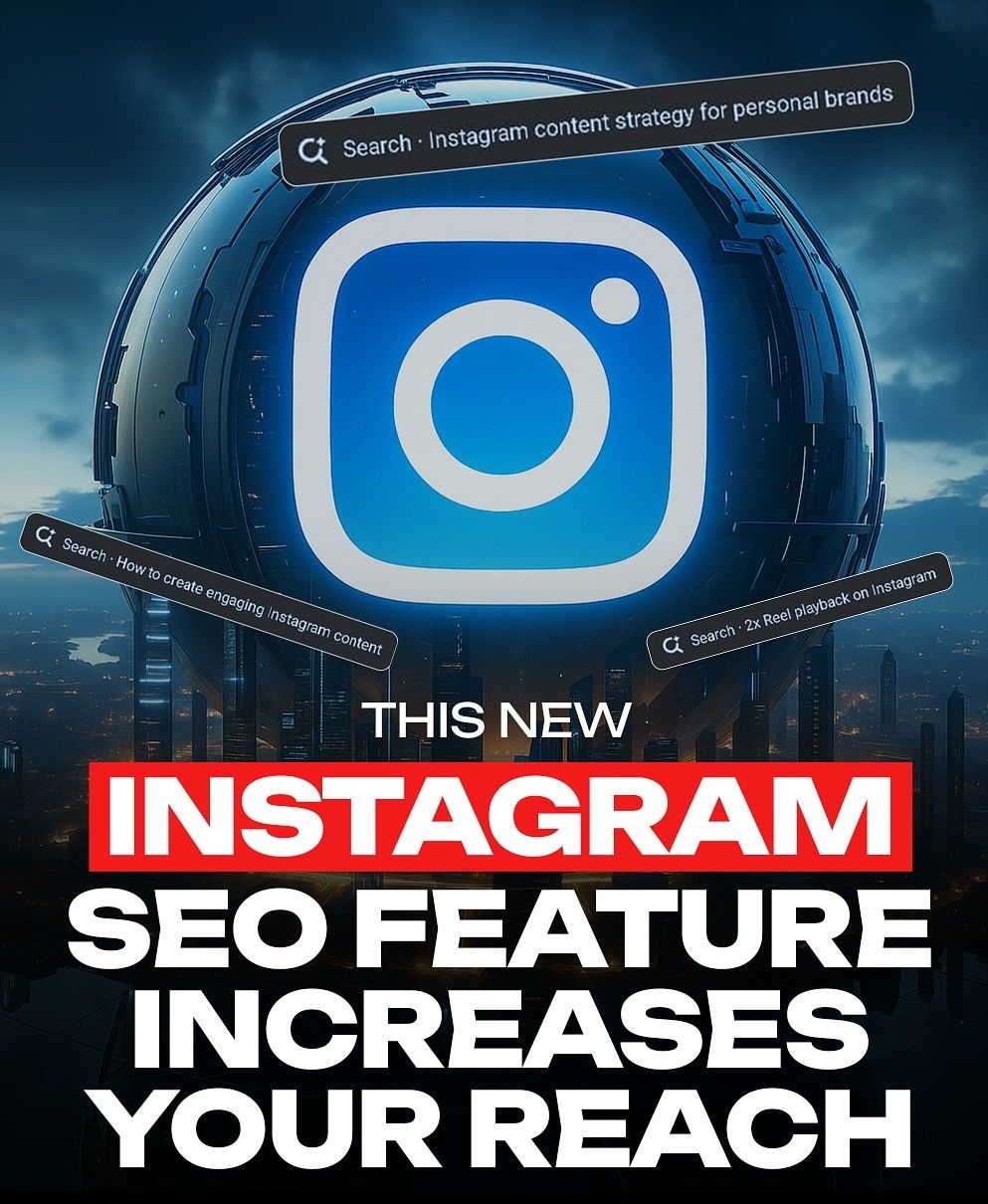
Instagram Search Labels Explained.
INSTAGRAM SEARCH LABELS CAN HELP MORE PEOPLE FIND YOU If you have been posting on Instagram and noticed a small blue search label above the comments, do not scroll past it. This little feature is one of the easiest ways to understand how Instagram sees your content. That blue label is Instagram saying:“We think your post is about this topic. Should we show it to more people looking for it?” When the label is correct, you win. It means your content is more likely to appear in:• Instagram searches• Trending topic pages• Suggested posts for new audiences• Google search results (yes, since July 10th, public posts can be found on Google) How Instagram decides your label?Instagram’s AI scans your content to guess the main topic. It looks at:• Your caption• The words you speak in the video• Any text in your visuals (photo or video)• Comments• Hashtags The first three are the most important. If your caption and video language match your topic, Instagram will get the label right more often. What happens if your post has more than one topic Sometimes a post covers different ideas. In that case, Instagram may change the label depending on who is looking at it. For example, one viewer might see “Fitness Tips” while another might see “Healthy Eating” on the same carousel. Why this matters for your reach?The label is like a first impression for your content in the algorithm.If it is wrong, your post might be shown to the wrong audience.If it is right, your post gets placed in the right “content cluster,” where people are already interested in your topic. How to use this to your advantage?• Write captions that clearly mention your topic early• Say your topic clearly in your video, especially in the first few seconds• Add on-screen text with your main keyword or phrase• Avoid mixing too many unrelated ideas in one post• Review your labels often to see if Instagram is “reading” you correctly When you guide Instagram’s understanding of your content, you guide your reach. Think of it as giving the platform a map to send your post to the right people.