Meta just dropped a MAJOR update that’s about to change performance marketing on Facebook & Instagram From 16 December 2025, Meta will start using your conversations with Meta AI (text + voice) to decide: • What ads you see• What content shows up in your feedIn short: your chats become targeting signals What’s changing? • Every time someone asks Meta AI a question (“best running shoes under ₹5K”, “how to start a podcast”, “CRM tools for small business”), that intent can now be used to power ad delivery • This goes beyond interests & behaviour. It’s real-time, explicit intent – what people say they want right now • No separate “opt-in” for ads. If you use Meta AI, your chats can fuel targeting.This is the closest Meta has come to search-like intent inside a social product Why this is HUGE for marketers Here’s what it means if you run ads: • Higher-intent audiences: You’re no longer only chasing people who clicked on a Reel or visited a website. You’re tapping into people actively asking for solutions • Smarter delivery for performance ads: Meta’s AI can better predict who is likely to buy / sign up / install – which should improve ROAS, CVR, and lead quality over time • Faster learning loops: As AI conversations scale, signals grow richer. Performance campaigns (Advantage+, broad targeting, value optimisation) will likely outperform over-segmented manual setups • Creative relevance becomes make-or-break If the system is matching ads to intent, lazy, generic creatives will die fast. Context-rich hooks that mirror user questions will win How brands & ad teams should respond (practically) If you’re a marketer, media buyer, founder or creator-led brand, here’s what to start doing: 1) Rewrite your hooks for intent • Old: “Premium wireless earbuds for everyone”• New: “Looking for wireless earbuds under ₹5K that don’t drop from your ears?” 2) Lean into broad + Advantage setupsLet Meta’s AI do the heavy lifting. Give it: • Clean conversion data (CAPI, proper events)• Enough budget & time to learn• Multiple creatives to test, not 1–2 static ads 3) Build modular creative libraries: • Multiple angles: problem, comparison, testimonial, offer• Multiple formats: short UGC, explainers, carousels, product demosYou’re optimising a creative portfolio, not a single “hero” ad 4) Double down on first-party data: • Pass back accurate purchase / lead quality data• Use this with Meta’s AI to train it on your best customers, not just generic buyers 5) Watch performance, not just CPMCPM might go up in the short term as the system tests. The real question: • Is ROAS improving?• Are CPAs stable or dropping?• Is lead / customer quality better? The mindset shift For years, performance marketers learned to: • Hack interests• Stack lookalikes• Over-engineer ad sets

Trillion Dollar Coach
When it comes to learning about leadership, I have a ritual of reading a specific book every December, Ashish Tulsian introduced me to this book in 2019, & since then it’s been a year-end ritual Most people think “personal brand” is shouting loudly on the internet, its opposite of that Brutal truths about leadership & personal branding from Trillion Dollar Coach, simplified for founders, content creators & leaders: 1) Your title makes you a manager: How your people talk about you when you’re not in the room makes you a leader 2) Authenticity is a strategy: Bring your full self to work:values, quirks, flaws, people follow the real you 3) Humility > authority: Respect isn’t a line in your bio; it’s how you show up when you could easily pull rank but you don’t 4) Care is real USP: Ask about families, health, struggles, people never forget leaders who genuinely care 5) Truth beats comfort: The leaders people trust most are the ones who tell them what they need to hear, not what they want to hear 6) Listening is a power move: Undivided attention is rare, makes people feel heard & they will remember you for life 7) Love + hard feedback: Great leaders hug with one arm & hold a mirror with the other. High challenge, high care 8) Protect the “trust envelope”: Do what you say. Keep confidences, one leak can destroy a decade of brand-building 9) Be a confidence amplifier: See potential people can’t see in themselves, lend them your belief until they build their own 10) Service over status: If you need the spotlight, you’ll lose the room, if you grow others, your reputation compounds 11) Treat everyone the same: Board member or barista, your brand is how you treat the person who can’t “do” anything for you 12) Show your scars: Admitting “I don’t know” or “I was wrong” makes people trust you more, not less 13) Feedback in real-time: Praise in public, correction in private, as close to the moment as possible, clarity is kindness 14) Kill ego politics early: Don’t tolerate drama, silos or “I, me, mine” behaviour, protect the mission ruthlessly 15) Build psychological safety: When people feel safe to speak up, they give you their best ideas not their safest ones 16) Use 1:1s for humans, not just OKRs: Start with life, then move to work, relationships first, dashboards later 17) Be aggressively generous: Time, intros, credit, opportunities, the market remembers givers more than takers 18) Crisis reveals true brand: Everyone watches how you behave when things break, that is your leadership identity 19) Only invest in the coachable: Energy is limited, pour it into the people who are hungry to learn, not those defending their ego 20) Live your 1st principles: Values don’t matter when it’s easy, they matter when it’s expensive Bill never called himself the “Trillion Dollar Coach” The world did, the best leaders who owned Trillion Dollar Companies did Your personal brand isn’t what you say about yourself, it’s about what others think of you

10 Things Every Subject Matter Expert Must Do to Build Their Personal Brand
10 Things Every Subject Matter Expert Must Do to Build Their Personal Brand Starting Day 1 – With no extra expense 1. Pick One Core Topic, Not 10 Start with one area you know deeply, something you can speak about confidently without research. ➡ Instead of “marketing,” go for “Instagram growth by creative storytelling” 2. Define Your Niche and Ideal Audience Clearly: Be laser-specific. You’re not speaking to “everyone who wants to grow.” You’re helping a very defined persona, know who you want to target/influence/reach ➡ Example: “First-time founders building a SaaS product without a tech co-founder.” 3. Choose One Platform to Begin — Based on Your Strengths & Audience Don’t chase all platforms. ➡ If you’re a good writer, start with LinkedIn. ➡ If you think visually, use Instagram. ➡ If you’re confident on camera, begin with YouTube Shorts or Reels. Once momentum builds, you can repurpose for others. 4. Start Simple: Use What You Already Have No need to create from scratch. Use old presentations, recorded Zoom calls, client FAQs, or handwritten notes. ➡ Turn a webinar into a blog post. A client query into a carousel. A training session into a short-form video. 5. Build Around 3–5 Evergreen Content Pillars These are your go-to themes that solve recurring problems for your audience. ➡ Examples: “Pricing Strategy for Freelancers,” “Time Management for Solo Consultants,” “Negotiation Tactics for First-Time Founders.” 6. Repurpose Ruthlessly Across Formats From one solid post, you can create: → A short LinkedIn video→ A carousel for Instagram→ A YouTube Short with voiceover→ Snippets for Twitter or Threads This multiplies your output without extra effort. 7. Use Free Tools to Stay Consistent Without a Team Use free scheduling tools like Buffer, Canva, Notion, or Metricool to plan and publish without daily stress.You don’t need a social media manager — you need a system. 8. Tell Personal Stories with Real Lessons Facts educate, but stories stick. Share your missteps, mindset shifts, and real-life case studies.It makes your expertise more human — and more memorable. 9. Build Authority First — Monetization Follows Don’t try to sell a course, webinar, or consulting service on Day 1.Use the first 3–6 months to build credibility, proof of expertise, and trust.Only then introduce paid offerings. 10. Treat This Like a 100-Post Game, Not a 100-Post Gamble You don’t become a thought leader in a month. If you stay consistent for 100 posts, you’ll learn faster, grow deeper roots, and unlock clients, speaking gigs, content deals, or investor interest Final Thought You already have the most important asset: your knowledge. What you need now is structure, consistency, and the courage to build publicly. The rest follows
Top Earners in 2024 & What’s Next in 25-26
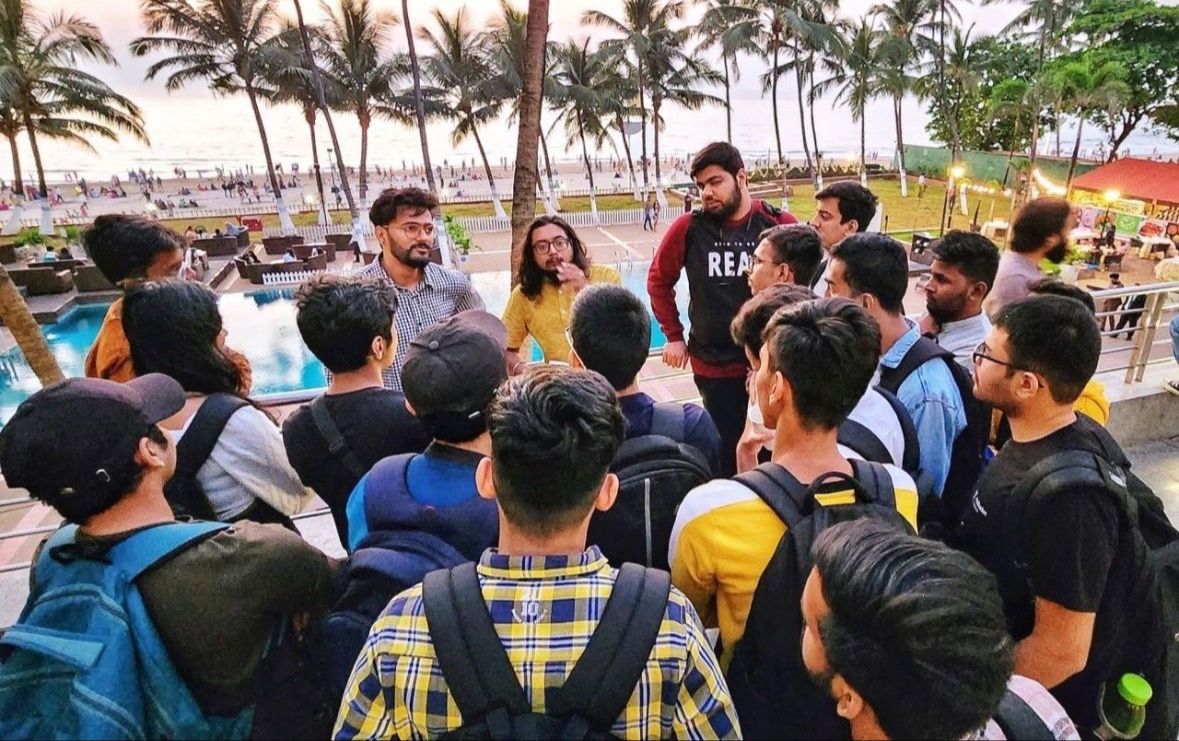
Top Earners in 2024 & What’s Next in 25-26 2024 saw content creators in Tech Reviews, Comedy/Entertainment, and Gaming/Roasting emerge as top earners driven by massive audience engagement and high-value brand deals. But as we step into 2025, new forces are reshaping the landscape: short-form video, nano-influencer UGC, AI-led creation, and direct monetisation. Snapshot of 2024: – YouTube paid ₹21,000+ Cr to Indian creators over the past 3 years.– Brands spent ₹2,344 Cr on influencer marketing in 2024; projected to hit ₹3,375 Cr by 2026 (25% CAGR).– 90% of content creator revenue came from brand deals but the ecosystem is evolving fast. 1) Top-Earning Niches in 2024: Tech, Comedy & Gaming led by margin – Education, Fitness, Fashion/Lifestyle creators also grew, but trailed leaders by 30 to 50% 2) Evolving Revenue Streams: – Ad Revenue & Brand Sponsorships still dominate.– Direct-to-Fan Models gaining traction:* Paid subscriptions (e.g. Insta, YouTube) are helping creators earn ₹10–20L/month* Live commerce & virtual gifting are building steady parallel income– Creator-led Product Sales & merchandise are on the rise. 3) 2025 Trends to Watch: * Short-Form Video Dominance: – 70%+ of UGC brand campaigns use 15–30 sec Reels/Shorts/– They deliver high engagement at low production cost * AI in Content & Strategy: – 76% of creators use AI for ideation, editing, trend analysis– 61% of brands now use AI for influencer operations * Nano & Micro-Influencers Rising: – 2M+ nano creators (1K–10K followers) now power hyper-local campaigns– 47% of brands prefer nano/micro creators for authenticity & ROI * Content-to-Commerce Shift: – BCG projects $1T+ creator-led commerce by 2030– In-video shopping, affiliate links, live shopping—especially in Tier 2/3 cities—are driving new revenue * UGC as Brand Strategy: – UGC campaigns improve web conversions by 29%– 75% of brands now include UGC in paid and organic content strategies 4) Advice for Brands & Creators: – Diversify revenue, don’t depend solely on brand deals– Double down on short-form UGC with regional/nano creators– Use AI to streamline content creation & performance tracking– Build community-commerce loops via live sales & affiliate models 2024 rewarded reach, but 2025, 26 will reward relevance Creators who are community-first, AI-aware, and commerce-ready will lead India’s next wave Image captured by Akash Shukla
Monetisation Beyond Ads & Brand Deals
Monetisation Beyond Ads & Brand Deals: Here’s a genre-wise ideas to help you monetise sustainably beyond AdSense and brand deals: 👗 Fashion & Lifestyle: 1) Sell styling guides, digital lookbooks, or presets2) Offer personal styling consults or closet audits3) Launch mini-courses on personal branding or fashion content4) Build a paid style tribe for early access and tips5) Share affiliate links via Amazon, Flipkart, Myntra, Nykaa, Meesho and other fashion eCommerce platforms ✈️ Travel & Food: 1) Sell curated itineraries, food maps, or local guides2) Host regional cooking classes or travel planning webinars3) Organise food walks or themed destination meetups4) Start a travel tribe for insider hacks and early drops5) Monetise through affiliate links: gear, hotels, kitchen tools 🎭 Entertainment & Fun: 1) Sell meme templates, character-based merch, or scripts2) Offer exclusive skits, live Q&As, or fa watch parties, meet-ups3) Host virtual comedy nights or reaction livestreams4) Teach content creation or humour-writing 1:15) Collaborate on digital entertainment IPs 🚀 Motivation & Aspiration: 1) Sell productivity planners, affirmation decks, or life templates2) Host workshops on clarity, discipline, and storytelling3) Offer mentorship or accountability-based coaching4) Run community-based growth challenges5) Launch a thought-led newsletter with real tools, not fluff 🧠 Research & Journalism, News Format: 1) Sell explainer decks, fact-checking templates, or story kits2) Launch paid Substack/newsletter with deep dives3) Host sessions on media literacy, storytelling, or analysis4) Crowdfund independent reports or docu-series5) Consult brands, students, or journalists on narratives 💻 Technology: 1) Sell tech playbooks, AI prompt libraries, or cheat sheets2) Host bootcamps: automation, coding, tools, GPT workflows3) Share affiliate links to SaaS, gadgets, or tech stacks4) Build a premium Discord for tech collabs5) Partner with startups for product demos or education 👨🏫 Teaching & Competitive Exams: 1) Sell notes, mock papers, formula charts, and revision kits2) Host live bootcamps for NEET, JEE, UPSC, CBSE, etc.3) Build a private Telegram/Discord study group4) Collaborate with EdTechs or local coaching centres5) Crowdfund free content or app-based learning tools 🌐 Bonus Tips For All Content Creators: 1) Launch paid communities via Patreon, InstaMojo, or Buy Me a Coffee, TopMate.io2) Host ticketed meetups, events, or retreats3) Monetise expertise via LinkedIn-sponsored content4) Speak at colleges, corporates, creator summits5) Co-create digital products, newsletters, or virtual events Remember – Your niche is your power– Your community is your capital– Build for depth, not just scale– Monetise with meaning If you want to connect with me to discuss starting/scaling content, strategy, growth, feel free to block my time using topmate.io/join2manish, reserve your slot
